Addressing Electrical Panel Capacity Before Adding Electric Heating Strips
Is Your Electrical Panel Prepared for Sudden Winter Heating Demands?
Addressing electrical panel capacity before adding electric heating strips is the single most important step you can take when upgrading your winter comfort system. Are you planning to enhance your home's heating setup this year, only to wonder if your current electrical infrastructure can actually handle the extra power? You are not alone. At Reliabee Air Electric Plumbing, we find that many homeowners focus entirely on the efficiency ratings of their new equipment while completely overlooking the electrical heartbeat of their home.
In mild winter climates like San Antonio, the weather can be incredibly deceptive. Most of the time, a standard heating system handles the ambient chill with ease, drawing a relatively low amount of power. However, when one of our notorious, unpredictable sharp freezes hits, your system must activate its supplemental electric heat strips to keep your family warm. These backup strips require a massive, sudden surge of electrical power to function. If your electrical panel is undersized or outdated, this sudden demand can lead to tripped breakers, damaged HVAC equipment, or even serious electrical fire hazards right when you need warmth the most.
Before you finalize any equipment upgrades, a professional electrical evaluation is absolutely non-negotiable. To ensure your home stays safe and warm, it is vital to coordinate your heating systems upgrade with a thorough, code-compliant electrical assessment.
The Illusion of the Modern Heating Upgrade
It is easy to assume that newer, high-efficiency equipment will automatically use less electricity than your old system. While the primary compressor technology has become incredibly efficient, the auxiliary heating elements still rely on raw electrical resistance to generate heat. This means that even the most advanced, top-of-the-line system will still demand a heavy electrical toll when the temperature drops below freezing. Understanding this dynamic is the first step in protecting your home from unexpected power failures.
The Hidden Electrical Load of Supplemental Heat Strips
To understand why your electrical panel might struggle, you have to look at how different heating components consume power. A standard heat pump operates by transferring heat from the outside air into your home. Because it is moving heat rather than creating it from scratch, the compressor runs highly efficiently. Under normal operating conditions, the compressor and the air handler fan draw a moderate amount of amperage—usually well within the capacity of a standard home electrical panel.
Electric heat strips, however, operate on a completely different principle. They use electrical resistance to generate heat, much like the glowing coils inside a toaster or an electric oven, but on a massive scale. When the outside air becomes too cold for the compressor to extract enough heat, these auxiliary strips kick on to bridge the gap. The power required to heat these large metal coils is immense.
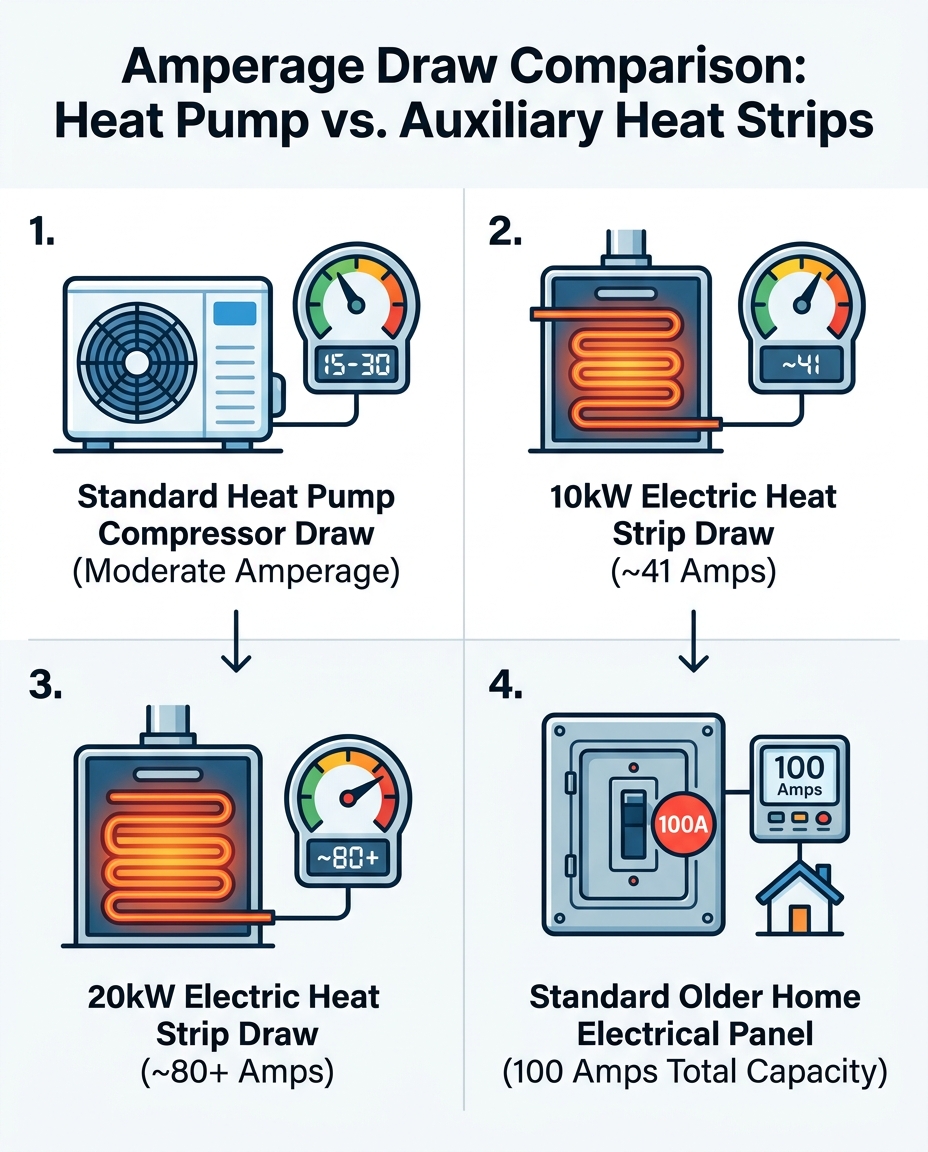
The Amperage Reality Check: Adding this massive load to an older home is a recipe for an overloaded system. In our years of inspecting electrical systems across San Antonio, we consistently see that many older homes were built with 100-amp main electrical panels. If a severe cold snap forces a 20kW heat strip to activate, that single HVAC component could demand 80 amps or more. When you factor in your refrigerator, water heater, lighting, and other appliances, you instantly exceed the panel's maximum capacity, guaranteeing overloaded circuits and tripped main breakers.
• Standard Compressor — Typical Amperage Draw (240V): 15 to 25 Amps — Impact on a Standard 100-Amp Panel: Moderate load, easily accommodated
• 10kW Electric Heat Strip — Typical Amperage Draw (240V): ~41 Amps — Impact on a Standard 100-Amp Panel: High load, consumes nearly half of total capacity
• 15kW Electric Heat Strip — Typical Amperage Draw (240V): ~62 Amps — Impact on a Standard 100-Amp Panel: Severe load, high risk of tripping main breaker
• 20kW Electric Heat Strip — Typical Amperage Draw (240V): ~83+ Amps — Impact on a Standard 100-Amp Panel: Critical load, virtually guarantees an overload
This high amperage draw is exactly why you cannot simply swap out an old furnace for a new system with heavy-duty heat strips without first looking inside your breaker box. The electrical demand is not just a suggestion; it is a hard physical limit of your home's wiring.
Why Mild Climates Face Unique Hazards During Sharp Freezes
If you live in a region with long, brutal winters, your heating system runs hard constantly, and any electrical deficits usually reveal themselves early in the season. But in San Antonio, the climate creates a unique and deceptive hazard. We experience long periods of mild winter weather where the primary compressor handles the heating load effortlessly. During these mild stretches, the auxiliary heat strips sit completely dormant inside the air handler, drawing zero power.
The danger arises during our sudden, unpredictable regional freezes. When the temperature plummets unexpectedly, the primary compressor can no longer keep up, and the thermostat automatically calls for emergency auxiliary heat. Suddenly, strips that have been dormant for 350 days out of the year activate all at once, pulling a massive electrical load. If your panel has not been properly sized for this rare event, it will fail precisely when heating is most critical.
Our team sees this pattern frequently when weather extremes hit. One local homeowner reached out to us last fall regarding a sudden heating issue when their system struggled during a temperature drop. Our technician, Mike, thoroughly explained the heating issue in simple terms and focused on completing the job correctly, ensuring the system could handle the load. Preparing for these rare but severe events is essential for home safety and consistent comfort.
The Risk of the Untested Panel
An untested electrical panel facing a sudden high amperage draw isn't just an inconvenience; it is a safety hazard. Wires that are forced to carry more current than they are rated for will rapidly heat up. Over time, this degrades the insulation around the wiring and can lead to electrical fires. By the time you smell burning plastic or notice scorch marks near your breaker box, the damage is already done. Proactive evaluation prevents this dormant danger from becoming a midnight emergency.
Understanding NEC Load Calculations for HVAC Upgrades
Because the stakes are so high, the electrical industry relies on strict safety codes to govern how new equipment is added to a home. The National Electrical Code (NEC) Article 220 requires a comprehensive load calculation before adding significant new loads to an existing residential service. This calculation is a mandatory safety standard, not an optional recommendation.
An NEC load calculation assesses the total concurrent electrical draw of your entire home against the panel's maximum capacity. It does not just add up the numbers on your breakers; it uses specific formulas to account for continuous loads (items that run for three hours or more, which require 125% capacity sizing) versus non-continuous loads. Because of the complex math and safety implications involved, calculating these loads requires licensed professional expertise and should never be attempted as a DIY project.
The Professional Load Calculation Process:
1. Inventory of Existing Loads: The electrician evaluates your current major appliances, square footage, lighting circuits, and dedicated receptacles.
2. Assessment of the New HVAC Equipment: The high amperage draw of the proposed heat strips is factored into the home's total demand profile.
3. Application of Demand Factors: Code-specific percentages are applied, recognizing that not every appliance in your home runs at 100% capacity simultaneously.
4. Final Capacity Determination: The final number is compared against your main service panel rating to see if the upgrade is safe.
Depending on the results, the professional will confirm that your panel has adequate capacity, recommend installing a sub-panel to redistribute specific loads, or require a "heavy-up"—a full panel upgrade to a 200-amp or larger service. Scheduling electrical services to perform this calculation guarantees that your home remains code-compliant and safe.
Signs Your Current Panel May Be Undersized
• Frequent tripped breakers: If your breakers flip when multiple appliances run simultaneously, your panel is already at its limit.
• Dimming or flickering lights: Noticeable light dimming when the HVAC system cycles on indicates a massive voltage drop.
• Outdated infrastructure: Having an older 100-amp service panel in a modern home with multiple electronic devices and heavy appliances is a strong indicator that an upgrade is necessary.
The Danger of Skipping Panel Checks During Fall Preparation
Timing is everything when it comes to home maintenance. September and the early fall pre-heating season represent the critical window for evaluating both your HVAC and electrical systems. Waiting until the first freeze hits to discover that your electrical panel cannot support your heating system is a stressful, freezing mistake.
Discovering an electrical deficit in the middle of a winter freeze leads to emergency service calls, premium after-hours dispatch fees, and potential days without heat while you wait for a panel upgrade to be permitted and installed. Furthermore, pushing an undersized panel to its breaking point during a cold snap risks severe safety hazards, including overheating wires, melted breaker terminals, or electrical fires.
At Reliabee, we see the value of proactive service year-round. For example, when one of our San Antonio customers experienced a sudden AC failure during the spring, our technician Mike Navarro clearly explained the problem and repair options, then completed the repairs quickly and efficiently. Applying this same proactive mindset to your heating system during the early fall prevents winter emergencies entirely. Routine HVAC maintenance must go hand-in-hand with verifying your electrical safety components.
Connecting HVAC and Electrical Health
Your heating system does not exist in a vacuum. It is the largest single consumer of electricity in your home. Proactive panel checks ensure that the power flowing to your air handler and heat strips is clean, consistent, and safe. If you have been ignoring warning signs, you might find tripping breakers linked to HVAC equipment occurring more frequently as the system strains against inadequate power delivery.
Streamlining Upgrades with a Dual-Licensed Contractor
One of the biggest logistical headaches homeowners face when adding supplemental heat is the coordination trap. Typically, you hire an HVAC contractor to install the equipment, only to have them halt work and tell you to "call an electrician" because the panel is undersized. You then have to find a reliable electrician, schedule a separate evaluation, wait for the panel upgrade, and finally call the HVAC team back to finish the job. This disjointed process wastes time, increases stress, and leaves you vulnerable to the cold.
Working with a dual-licensed contractor eliminates this nightmare completely. Because our team at Reliabee handles both the HVAC heat strip addition and the electrical panel load calculation in-house, you save yourself the hassle of hiring and coordinating two separate companies. A dual-licensed team seamlessly performs the NEC load calculation, upgrades the panel if necessary, and installs the heat strips in one unified, highly coordinated process.
This comprehensive approach guarantees increased safety and accountability. When one expert team oversees the entire intersection of heating and electrical work, there is no finger-pointing between different contractors if an issue arises. The electrical side knows exactly what the HVAC side needs, and the HVAC side knows the electrical foundation is rock solid. Integrating this unified evaluation into your routine maintenance plan during the early fall pre-heating season is the smartest way to protect your home.
Frequently Asked Questions About Heat Strips and Electrical Capacity
How many amps does an electric heat strip use?
Most residential electric heat strips draw between 30 and 60 amps, depending on their kilowatt rating. A standard 10kW strip draws approximately 41 amps at 240 volts. This is a significantly high amperage draw compared to the standard heat pump compressor, which typically only requires 15 to 25 amps to operate.
Can my electrical panel handle a new heat pump with auxiliary heat?
It depends entirely on your home's total concurrent electrical load and the size of your main breaker panel. Older 100-amp panels frequently require an upgrade to handle the massive addition of heat strips safely. Only a professional NEC load calculation can provide a definitive, safe answer for your specific home.
Do I need to upgrade my electrical panel for electric heat?
An upgrade is absolutely necessary if the new heat strips push your home's total electrical demand beyond the panel's rated capacity. Failing to upgrade an undersized panel violates safety codes and risks severe electrical hazards, including melted wires and electrical fires. A licensed electrician must evaluate your system to determine if a heavy-up is required.
Why does my heat pump auxiliary heat trip the breaker?
Tripping breakers indicate that the circuit is overloaded, the breaker is failing, or there is a dangerous short in the wiring. This often happens when high-draw heat strips activate on an improperly sized circuit or when the main panel is undersized for the sudden load. It requires immediate professional diagnosis to prevent fire risks and restore safe heating.
When is the best time to schedule a load calculation for winter heating?
Early fall is the ideal time to schedule a load calculation, well before the first sudden freeze hits your area. Scheduling early ensures that any necessary panel upgrades or wiring modifications can be completed without interrupting your winter comfort. Proactive fall preparation keeps your family warm and safe when the severe weather eventually arrives.
Secure Your Home for Winter with a Professional Panel Evaluation
Adding auxiliary heat to your home is a major electrical event, not just a simple HVAC adjustment. Because these components demand a high amperage draw, a professional load calculation is the only way to guarantee safety and code compliance. Do not wait for the first cold snap to test your system's limits. Schedule an evaluation with our dual-licensed experts during the early fall pre-heating season to ensure your home is fully prepared, safe, and ready for whatever winter brings.

Ready to Transform Your Home?