Resolving Strange Noises from Your Plumbing Vents During High Winds
The Unsettling Sounds of Fall Storms in Your Plumbing
Here at Reliabee Air Electric Plumbing, we know that as the intense summer heat finally breaks, San Antonio's transition into autumn brings a welcome change in temperature, but it also ushers in severe thunderstorms and gusty weather. When these weather systems roll through, you might start noticing bizarre sounds echoing from your walls or drains. If you are focused on resolving strange noises from your plumbing vents during high winds, you are not alone. Our team takes countless calls from homeowners who are caught off guard when a seemingly quiet house suddenly begins to hum, whistle, or gurgle loudly in response to the weather outside.
While a certain amount of wind noise rattling against the siding or roof is entirely normal during September fall storms and high wind events, sounds originating specifically from your drains indicate a deeper issue. These noises are not just harmless quirks of an older house; they are direct symptoms of a pressure imbalance within your home's drainage system. Determining whether these strange noises are just ambient storm sounds or the warning signs of a blocked roof vent pipe is critical for protecting your home.
Your plumbing system relies on a delicate balance of air and water to function correctly. When that balance is disrupted by severe weather exposing a hidden blockage, the resulting pressure changes can compromise your indoor air quality and drainage efficiency. Addressing this requires professional diagnostics to ensure the system is cleared safely. If you suspect your system is struggling to breathe during storms, reaching out for professional residential plumbing services is the most effective way to restore proper function and peace of mind.
Understanding Bernoulli's Principle and Your Home's Drainage
To understand why a windy day makes your drains noisy, it is helpful to look at the basic physics governing the San Antonio TX residential homes our plumbers service every day. Every plumbing system has two main components: the pipes that carry wastewater away, and the vent pipes (usually exiting through the roof) that bring fresh air in. The primary function of a plumbing roof vent is to allow sewer gases to escape outdoors while letting atmospheric air in to replace the water flowing down the drains. This process maintains a neutral pressure environment.
How Vents Regulate System Pressure
Think of your plumbing system like a plastic straw in a glass of water. If you cover the top of the straw with your finger and pull it out of the glass, the water stays trapped inside because no air can enter to replace it. Your plumbing vents act as the open top of that straw. When you flush a toilet or drain a bathtub, a large volume of water rushes down the pipes. Without a vent to let air in behind that water, the rushing liquid would create a vacuum, slowing down the drainage process.
Crucially, this system also relies on P-traps—the curved sections of pipe beneath your sinks and showers. These traps hold a small amount of water at all times, creating a liquid seal that prevents hazardous sewer gases from backing up into your living spaces. The vent ensures that the pressure inside the pipes remains stable, so that the water in the P-traps is never sucked away by draining water.
The Vacuum Effect of High Winds
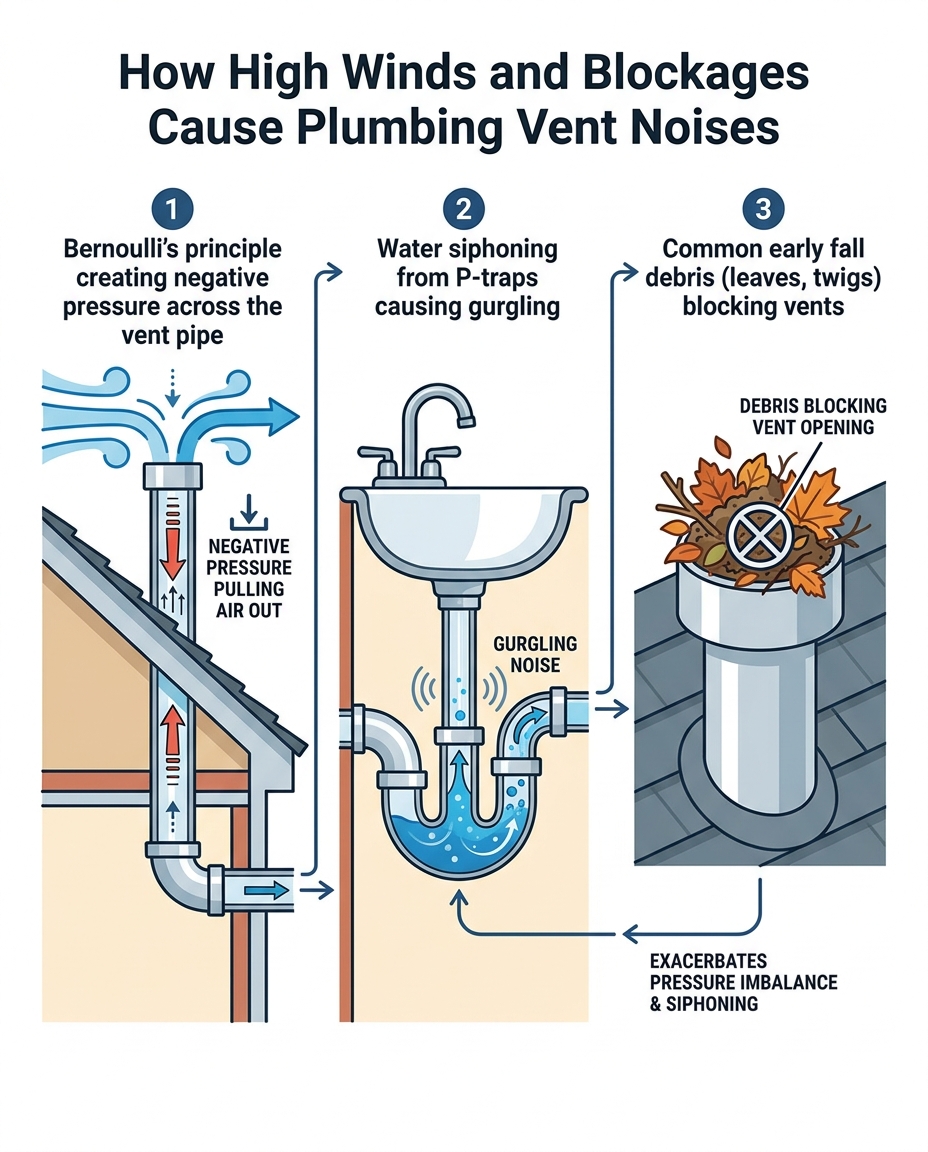
When high winds blow across the top of an open pipe on your roof, they create a physical phenomenon known as Bernoulli's principle. Simply put, fast-moving air has lower pressure than slow-moving or stationary air. As storm winds shear across the opening of your plumbing vent, they create a localized area of negative pressure—a vacuum—right at the top of the pipe.
In a perfectly clear, properly functioning vent pipe, this negative pressure is easily equalized by the air inside the system, and no noticeable effects occur inside the house. However, if the vent is partially or fully blocked, that vacuum effect seeks the path of least resistance. Instead of pulling air from the blocked vent opening, the negative pressure starts pulling air from inside the house, dragging it backward through the water seals in your P-traps.
• Clear & Unobstructed — Wind Interaction (Bernoulli Effect): Negative pressure is naturally equalized by atmospheric air entering the pipe. — Result Inside the Home: Normal drainage; P-trap water seals remain intact; no unusual noises.
• Partially Blocked — Wind Interaction (Bernoulli Effect): Airflow is restricted, forcing the vacuum to pull from secondary sources. — Result Inside the Home: Intermittent whistling from walls; slow drains during high wind gusts.
• Fully Blocked — Wind Interaction (Bernoulli Effect): Vacuum effect pulls aggressively against the home's interior plumbing fixtures. — Result Inside the Home: Loud gurgling toilets; drained P-traps; strong sewer gas odors in the home.
Gurgling Toilets and Whistling Walls: Recognizing the Symptoms
In our years of experience diagnosing blocked vents in San Antonio TX residential homes, we've found that when the physics of negative pressure interact with a restriction, the symptoms are immediate and difficult to ignore. Understanding what these sounds mean can help you identify the severity of the pressure imbalance before it leads to larger plumbing failures.
1. The Whistling Sound: A high-pitched whistling or whining noise coming from behind your walls usually occurs when a vent is partially blocked. As the wind creates a vacuum, air is forcefully squeezed through narrow gaps in the blockage or pulled past dried-out P-traps in guest bathrooms. The harder the wind blows, the louder and more erratic the whistling becomes.
2. Gurgling Toilets and Drains: This is one of the most alarming symptoms for homeowners. When the roof vent is heavily restricted, the negative pressure pulls so hard that it actually siphons the water right out of your toilet bowl or drain traps. As the air bubbles forcefully through the remaining water, it creates a loud, rhythmic gurgling or "glugging" sound. You may even see the water level in the toilet bowl mysteriously drop during heavy wind gusts.
3. Foul Odors Entering the Home: This is a secondary, but highly critical, symptom. When the wind successfully siphons the water out of your P-traps, the protective seal is broken. Without that water barrier, nothing prevents toxic, unpleasant sewer gases from drifting freely into your living space.
4. Slow Drainage During Storms: You might notice that your sinks and tubs drain perfectly fine on calm days, but become sluggish and slow to empty when the wind picks up. This indicates that the vent is struggling to supply enough air to balance the system under weather-induced stress.
These symptoms are more than just auditory annoyances; they are clear indicators of compromised indoor air quality and reduced drainage efficiency. The impact of clogged plumbing vents extends beyond noise, creating an environment where harmful gases can accumulate inside the home. Recognizing these signs early is the first step toward resolving the underlying blockage.
How Early Fall Debris Chokes Roof Vent Pipes
If wind is merely the catalyst that exposes the problem, the actual root cause is almost always a physical blockage within the vent pipe. Seasonal transitions are particularly notorious for causing these clogs. Our technicians routinely find that local San Antonio storm debris and early fall leaf drop are the primary culprits for sudden roof vent blockages, turning a perfectly functioning plumbing system into a noisy, gurgling nuisance overnight.
During the long, dry summer months, vent pipes sit open and exposed, slowly accumulating latent blockages that only reveal themselves when September fall storms and high wind events finally arrive. Common causes of these obstructions include:
• Early Fall Foliage: As trees begin to shed their leaves, wind easily carries them across the roofline. Live oak leaves, pine needles, and small twigs can drop directly into the open, uncovered pipe, slowly building a matted plug.
• Animal and Bird Activity: Vent pipes radiate warmth from the home's interior, making them highly attractive real estate for local wildlife. Birds frequently build nests inside the top of the stack during the drier summer months. When the fall rains and winds arrive, these nests become waterlogged, swelling up to create an airtight seal.
• Severe Thunderstorm Debris: Heavy storms don't just blow leaves around; they can dislodge asphalt shingle grit, snap small tree branches, and send heavy debris skidding across the roof. A sudden gust can easily wedge a piece of debris directly into the vent opening, instantly turning a minor restriction into a full-blown blockage.
• Deteriorating Pipe Materials: In older homes, cast iron vent stacks can corrode and flake off on the inside. Over time, this rust and scale can collapse inward, catching passing debris and forming an impenetrable clog deep within the pipe.
Because these blockages happen slowly over the summer, the sudden onset of whistling and gurgling during the first major fall storm often feels like a completely random event, even though the clog has been building for months.
The Hidden Dangers of DIY Roof Inspections After a Storm
When faced with a whistling wall or a gurgling toilet, the natural instinct for many homeowners is to grab a ladder and climb onto the roof to check the vent pipe. However, attempting to diagnose or clear a roof vent yourself—especially during or immediately after a storm—poses severe safety risks.
Walking on a wet, wind-swept roof is incredibly dangerous. The combination of slick shingles, steep pitches, and sudden wind gusts creates a perfect storm for accidents. According to the Centers for Disease Control and Prevention (CDC), falls from ladders and roofs remain one of the leading causes of severe home maintenance injuries. Professional diagnosis is not just a convenience; it is a necessary safety measure designed to keep the homeowners we serve in San Antonio TX residential homes safely on the ground.
Beyond the physical danger of the climb, clearing a plumbing vent requires specialized tools and expertise. A visual inspection from the top of the roof rarely reveals the whole picture, as blockages can occur several feet down the stack, completely out of sight. Homeowners who attempt to clear these unseen clogs often make costly mistakes:
• Improper Tools: Shoving a garden hose or a standard, short drain snake down a vent pipe can compact the debris further, turning a loose pile of leaves into a solid, impenetrable plug. In some cases, improper tools can crack or puncture older PVC or cast iron pipes.
• Chemical Damage: Pouring harsh chemical drain cleaners down a roof vent is highly ineffective against organic matter like bird nests or leaves, and the caustic chemicals can severely damage the integrity of your plumbing stack.
• Flushing Debris: Attempting to flush the blockage down with high-pressure water from a garden hose can backfire, forcing the clog deeper into the main sewer line and causing a whole-house sewage backup.
The safest and most effective approach is to leave the ladder in the garage and rely on trained experts who have the equipment to handle the job without risking injury or property damage.
Professional Strategies for Clearing Wind-Exposed Plumbing Vents
When you call Reliabee Air Electric Plumbing to address pressure imbalances in your plumbing, you are investing in a comprehensive, safe, and permanent solution. Our trained technicians use proper safety gear, fall protection, and advanced diagnostic equipment, ensuring the job is done right without risking homeowner injury or damaging the pipes in San Antonio TX residential homes.
The Problem: The homeowner is experiencing whistling pipes, gurgling toilets, and sewer gas odors during high winds, indicating a negative pressure vacuum caused by an inaccessible blockage.
The Cause: Debris, such as leaves, twigs, or animal nests, has become lodged deep within the roof vent stack, preventing atmospheric air from entering the system to equalize the pressure.
The Solution: Professional intervention utilizing specialized drain clearing technology. The process typically begins with safety. Technicians utilize proper roof harnessing and slip-resistant gear to safely access the vent opening. Once positioned, they do not simply guess at the location of the clog. Instead, they deploy high-definition video camera inspection tools, lowering a lighted camera down the stack to pinpoint the exact depth, size, and composition of the blockage.
Once the blockage is identified, the technician selects the appropriate tool for removal. For loose debris like leaves or small nests, a specialized, motorized vent auger can break apart the material and safely extract it. For stubborn, compacted clogs or heavy scale buildup on the pipe walls, professionals may utilize hydro-jetting equipment. This process uses highly pressurized water to scour the inside of the pipe, completely obliterating the blockage and washing the remnants safely down the main sewer line without damaging the vent stack.
If you are dealing with sudden, severe pressure imbalances that are pulling sewer gases into your home, this situation often warrants a call for emergency plumbing support. Once the vent is professionally cleared, the pressure equalizes immediately. The whistling stops, the toilets cease their gurgling, and the home's drainage system returns to quiet, efficient operation.
Frequently Asked Questions About Wind and Plumbing Vents
Why does my plumbing vent whistle in the wind?
Your plumbing vent whistles because high winds create a vacuum at the top of the pipe, and a blockage inside the vent forces air to squeeze through narrow gaps. When September fall storms and high wind events blow across a partially clogged roof vent, the negative pressure pulls air from inside your home. As this air rushes past dried P-traps or tight spaces in the blockage, it generates a high-pitched whistling sound.
Why does my toilet gurgle when it's windy?
A gurgling toilet during windy weather indicates that your plumbing vent is severely or completely blocked. The wind creates negative pressure that cannot be equalized by fresh air entering the vent. Instead, the vacuum forcefully siphons water out of your toilet bowl and drain traps, causing air bubbles to rush through the remaining water, which produces the loud gurgling noise.
Is a whistling plumbing vent dangerous to my home?
While the whistling sound itself is not dangerous, the underlying pressure imbalance can pose health risks. If the vacuum effect is strong enough to siphon the water out of your P-traps, the liquid seal that keeps sewer gases out of your home is broken. This allows toxic, foul-smelling gases to enter your living spaces, compromising your indoor air quality and requiring professional inspection.
Can high winds affect other parts of my plumbing system?
High winds primarily affect the roof vent stack, but the resulting pressure imbalances impact the entire drainage system. You may notice that sinks drain much slower during a storm, or that multiple fixtures across different bathrooms begin to gurgle simultaneously. The entire system is interconnected, meaning a blockage at the roof level restricts the breathing capacity of every drain in the house.
How do professionals safely fix a noisy plumbing vent?
Professionals fix noisy plumbing vents by safely accessing the roof with proper fall-protection gear and using diagnostic cameras to locate the exact source of the clog. Once the debris is identified, they use specialized motorized augers or hydro-jetting equipment to break apart and remove the blockage. This restores proper airflow, equalizes the system pressure, and immediately stops the whistling and gurgling noises.
Restore Quiet and Safety to Your Home's Drainage System
Hearing strange whistling and gurgling sounds from your pipes during a storm can be unsettling, but these noises are simply your home's way of signaling a pressure imbalance. When wind shear interacts with a plumbing vent blocked by seasonal debris, the resulting vacuum disrupts the delicate balance of air and water in San Antonio TX residential homes. We've seen firsthand how ignoring these sounds can lead to drained water seals and the intrusion of unpleasant sewer gases into your living spaces.
Because diagnosing and clearing a roof vent requires navigating dangerous, weather-slicked roofs and utilizing specialized diagnostic cameras, it is critical to leave this task to the experts. Staying safely on the ground protects you from severe injury and prevents accidental damage to your pipes. If your home's plumbing acts up every time the wind blows, it is time to schedule professional drain and sewer clearing. A trained technician from our team can safely inspect your vents, remove the hidden blockages, and ensure your drainage system operates quietly and efficiently all season long.

Ready to Transform Your Home?