HVAC Maintenance Diagnostics: Decoding Heating Startup Smells and Symptoms
Navigating the First Fall Heating Cycle
The thermostat clicks, the blower engages, and within minutes, a distinct burning odor fills the hallway. At Reliabee Air Electric Plumbing, when we share reliable home maintenance tips and troubleshooting with our San Antonio customers, addressing that first alarming smell of the season is usually at the top of the list. Turning on the heating system after months of complete inactivity often triggers immediate concern for homeowners. The immediate decision point is clear: you need to determine if this symptom is a normal seasonal transition or a severe safety hazard that requires immediate attention.
This is a very common scenario during a mid fall / October heating startup. For the better part of the year, your system has been dedicated to keeping the house cool. Transitioning away from heavy reliance on air conditioning services requires a shift in how we monitor system health and performance. The sounds, smells, and cycles of a heating system are entirely different from those of a cooling system, and that sudden change can be jarring.
Reacting to these changes does not have to be a source of stress. Establishing a proactive HVAC maintenance plan is the best way to prevent startup anxiety before the temperature drops. By understanding exactly what happens inside your ductwork and air handler when the seasons change, you can confidently evaluate your system's performance and know exactly when it is time to call our team for professional help.
The Anatomy of a Heating System After Summer Inactivity
The problem: When the first cold front arrives, homeowners expect their heating systems to work flawlessly. However, after 7 to 8 months of complete inactivity, our technicians frequently find internal components coated in a layer of settled airborne debris. San Antonio's intense summer heat necessitates long periods where the heating components sit completely idle, leading to much heavier dust accumulation than systems in northern climates that might be used more frequently year-round.
The cause: A standard split-system heat pump operates by moving heat from one place to another. During the summer, it pulls heat out of your home. When you switch to heating mode, a component called the reversing valve shifts, and the system begins extracting ambient heat from the outside air to warm your home. Because the indoor heating elements and auxiliary heat strips have not been energized since early spring, pet dander, household dust, and lint have had months to settle directly onto these surfaces.
The solution: Understanding the initial burn-off process is the key to setting expectations for normal system behavior. When those heating elements reach operating temperatures for the first time, the accumulated dust incinerates. This creates a distinct, temporary odor that spreads through the ductwork. Knowing that this is a mechanical reality of a split-system heat pump transitioning from cooling to heating helps alleviate the panic of that first startup sequence.
Distinguishing Normal Dust Burn-Off from Electrical Hazards
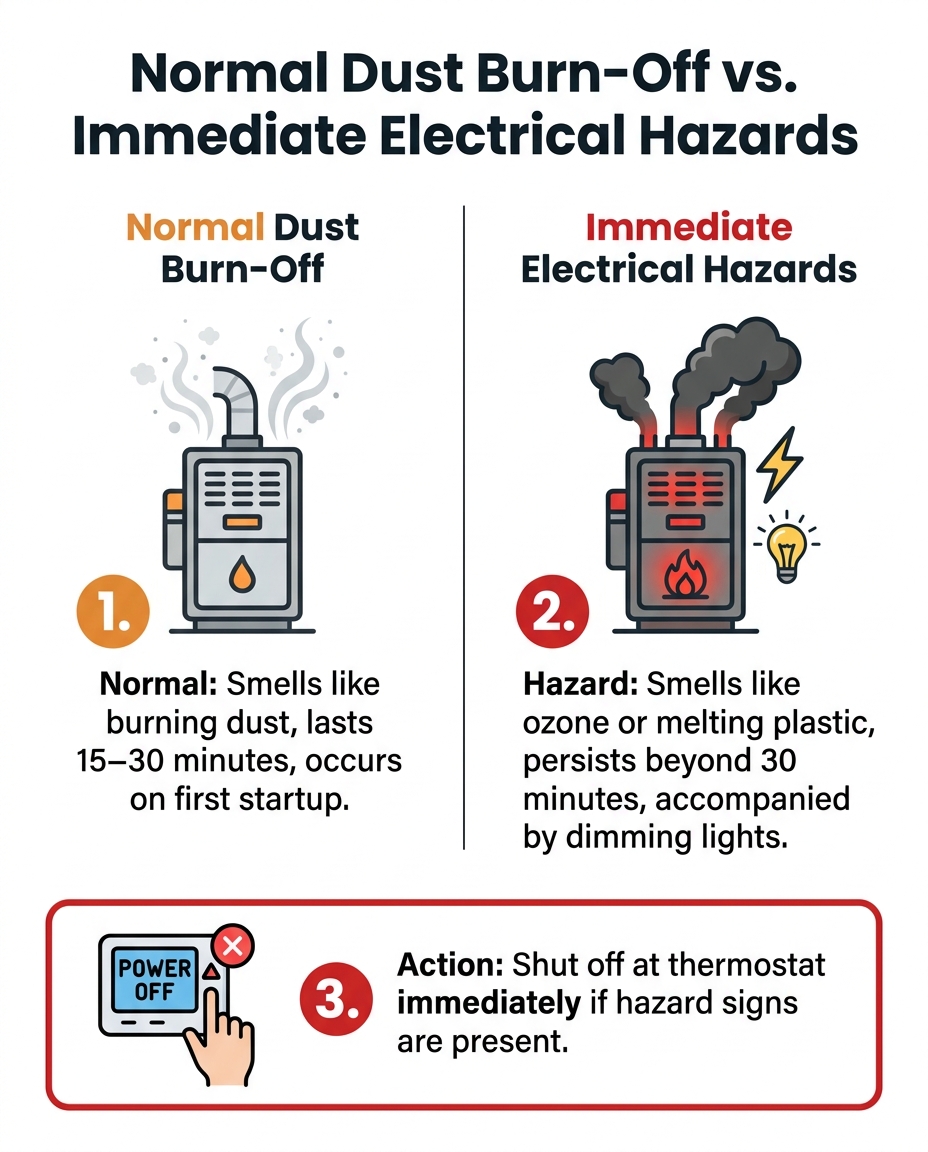
Telling the difference between harmless dust burning and a dangerous electrical failure is the most important diagnostic step a homeowner can take during a mid fall / October heating startup. While a brief odor is standard, certain smells indicate that wire insulation is melting or electrical components are overheating.
Just last fall, our team at Reliabee Air Electric Plumbing responded to a homeowner who noticed a persistent heating issue and called for an inspection. Our technician thoroughly explained the heating problem in simple terms, identified a failing component that was causing a lingering odor, and fixed it safely. This highlights exactly why accurate observation matters.
To help you accurately identify the source of an odor, it helps to contrast these specific heating smells with other seasonal HVAC issues, such as why your AC might smell like sewage (which is typically related to blocked condensate drains, not electrical heat).
• Odor Profile — Normal Dust Burn-Off: Smells like a hot, dusty radiator or singed lint. — Electrical / Plastic Hazard: Smells like melting plastic, burning hair, fish, or sharp ozone.
• Duration — Normal Dust Burn-Off: Fades away completely within 15 to 30 minutes. — Electrical / Plastic Hazard: Persists beyond 30 minutes or gets stronger over time.
• Visual Signs — Normal Dust Burn-Off: None. Just the temporary smell from the vents. — Electrical / Plastic Hazard: Dimming lights, tripped breakers, or visible smoke at the unit.
• Required Action — Normal Dust Burn-Off: Allow the system to run and ventilate the home. — Electrical / Plastic Hazard: Shut off the system at the thermostat immediately.
When to Shut Down the System Immediately
There is a definitive safe window for normal dust burn-off, and it typically maxes out at 30 minutes. If the smell of electrical ozone, melting plastic, or a strange fishy odor persists beyond that half-hour mark, you must take action. Instruct your family to turn off the system directly at the thermostat. Ignoring persistent odors is highly risky; national statistics consistently show that electrical failures in home systems are a leading cause of property damage. Never force a system to run if it is producing a sharp, chemical, or melting plastic smell.
The Hidden Impact of High Humidity on Idle Components
The role of regional climate: While the system is turned off, the environment around it continues to affect its internal parts. In our experience servicing San Antonio homes, the high summer humidity plays a significant role in accelerating minor corrosion on idle heating electrical contacts. Prolonged exposure to high ambient moisture causes a slow degradation of the metal surfaces inside your outdoor unit and indoor air handler.
The mechanics of corrosion: When a split-system heat pump sits idle, the copper wiring, contactors, and terminals are exposed to this moisture. Over several months, a thin layer of oxidation or minor corrosion can form on these electrical connections. When the heater is finally engaged in the fall, electricity must push through this new layer of oxidation.
The resulting heat: Compromised connections lead to increased electrical resistance. In the world of electrical systems, resistance generates heat. This localized overheating at a corroded terminal can actually melt the surrounding wire insulation, creating a burning plastic smell that mimics dust burn-off but is far more dangerous. This hidden degradation is exactly why visual inspections of these connections are a critical part of seasonal care.
Recognizing Whole-Home Electrical Strain from Aging HVAC Systems
The problem: Sometimes, the symptoms you observe during a mid fall / October heating startup are not strictly an HVAC issue. Homeowners often notice that the lights in their living room dim significantly when the heating system kicks on, or they find themselves resetting a tripped breaker at the main panel.
The cause: An aging HVAC system draws significantly more amperage during its startup phase—a phenomenon known as inrush current. As blower motors and compressors age, their internal bearings wear down, requiring more electrical power to overcome the initial physical resistance. This massive pull of electricity can stress the entire home's electrical panel, especially if the panel is older or near its maximum capacity. What appears to be an HVAC odor might actually be an overloaded electrical circuit heating up at the breaker box.
The solution: It is highly recommended to have a professional assess both the mechanical and electrical sides of the system. Working with a company like Reliabee Air Electric Plumbing that provides multi-trade expertise means our technicians understand both HVAC and electrical systems. We can spot overlapping whole-home issues, like panel strain, during standard maintenance visits. If you suspect your panel is struggling to handle the load of your heating system, scheduling thorough electrical system inspections with our team is a smart preventative measure.
Safe Observation: A Homeowner's Diagnostic Checklist
Before calling for a repair, there are several safe, non-invasive observations you can make. Providing accurate information to your technician speeds up the diagnostic process. Recently, our technicians at Reliabee responded to a commercial 5-ton unit that required attention after a recent installation; the owners feared a major replacement was needed, but our team identified that a simple adjustment was all that was required, saving time and headache by correctly diagnosing the issue based on clear symptoms.
Here is a safe observation checklist for your split-system heat pump:
• Verify thermostat settings: Ensure the system is actually set to "Heat" and the temperature is set higher than the current room temperature. A system will not engage if it is not actively calling for heat.
• Listen for unusual noises: Pay attention to the initial startup sequence. A soft hum is normal, but loud grinding, squealing, or metal-on-metal scraping indicates a failing motor bearing or a loose blower wheel.
• Monitor airflow consistency: Place your hand near a vent (without opening the ductwork) to check the temperature. The air should feel steadily warm after a few minutes, avoiding prolonged periods of lukewarm air.
• Check the outdoor unit: Look at the outdoor condenser to ensure it is clear of leaves and debris, but never open the access panels.
• Document the timeline: Note exactly how long any smells or noises last. This information is incredibly helpful when our team conducts a home performance evaluation.
Beyond Odors: Addressing Lukewarm Air and Defrost Cycles
Understanding heat pump temperatures: One of the most common concerns during the fall transition is the temperature of the air coming from the vents. A split-system heat pump might blow air that feels lukewarm temporarily as it extracts ambient heat from the outdoors. Unlike a gas furnace that delivers air at 120 degrees or higher, a heat pump typically delivers air around 90 to 95 degrees. Because normal human body temperature is 98.6 degrees, this air can feel slightly cool to the touch, even though it is actively warming the house.
The defrost cycle: As outdoor temperatures drop closer to freezing, the outdoor coil on your heat pump can accumulate frost. To protect itself, the system automatically enters a normal defrost cycle. During this cycle, the outdoor fan will temporarily stop spinning, and you may see a cloud of steam rising from the unit as the frost melts. This is entirely normal and not a sign that the unit is overheating or on fire.
Auxiliary heat engagement: While the system is in defrost mode, it may temporarily blow cold air inside. To counteract this, the system automatically engages the auxiliary electric heat strips. Because these strips sit idle for most of the year, their sudden activation might cause a secondary burning dust smell, even if you already went through the initial burn-off weeks prior.
When to call a professional: Lukewarm air transitions from a temporary quirk to a sign of refrigerant issues if the home's indoor temperature never actually reaches the set point on the thermostat, or if the system runs continuously for hours without cycling off.
Securing Peace of Mind for the Winter Ahead
Distinguishing between normal dust burn-off and immediate electrical hazards is a fundamental part of home safety. A mid fall / October heating startup is the perfect time to observe your system, note any unusual symptoms, and ensure everything is operating smoothly before the freezing weather arrives. Ignoring persistent symptoms—like melting plastic odors or constantly tripping breakers—can lead to severe breakdowns during colder months.
During a previous winter cold snap, our Reliabee technicians helped a local homeowner whose heat was not working properly right when it was needed most. We carefully explained the problem, fixed the heat efficiently, and restored reliable warmth to the home. You can avoid emergency situations by acting early. Encourage your family to rely on professional diagnostics rather than guessing about system safety, and consider scheduling a thorough tune-up with us to ensure reliable performance all season long.
Frequently Asked Questions
Why does my heater smell like burning dust?
Your heater smells like burning dust because particles settle on the heating elements during the long summer months when the system is not in use. When you turn the heater on for the first time in the fall, these elements get extremely hot and incinerate the accumulated dust. This burn-off process creates a distinct, temporary odor that spreads through the air vents.
How long should a heater smell when first turned on?
The burning dust smell should completely fade away within 15 to 30 minutes of the first startup. Once the initial layer of dust has been incinerated, the air should return to smelling normal. If the odor continues for more than half an hour, or gets noticeably stronger, it is time to turn the system off and investigate further.
Is it safe to run a heater if it smells like burning?
It is only safe to run the heater if the smell is strictly burning dust and it disappears within 30 minutes. If the odor resembles melting plastic, burning hair, fish, or sharp electrical ozone, it is not safe to run the system. These specific smells indicate an electrical hazard, and you should shut the system down at the thermostat immediately.
Why is my heat pump blowing lukewarm air in the fall?
A heat pump naturally produces air that is around 90 to 95 degrees, which can feel lukewarm against your 98.6-degree skin, unlike the much hotter air from a gas furnace. Additionally, the system might temporarily blow cooler air while it runs a defrost cycle to melt frost off the outdoor unit. However, if the house never reaches the desired temperature, it could indicate a refrigerant leak or compressor issue.
Can an aging heat pump cause electrical panel issues?
Yes, an aging heat pump can place significant strain on your home's electrical panel. As the internal motors and compressors wear out, they require a much larger surge of electricity (inrush current) to start spinning. This massive power draw can cause your interior lights to dim or frequently trip the dedicated breaker at your main electrical panel.
What should I do if my heater smells like melting plastic?
If your heater smells like melting plastic, you must turn the system off at the thermostat immediately. Do not wait to see if the smell goes away, as this odor strongly indicates that wire insulation is melting or an electrical component is dangerously overheating. Leave the system off and contact a licensed HVAC professional to inspect the wiring and internal components.

Ready to Transform Your Home?