HVAC Maintenance: Troubleshooting Your First Fall Heating Startup
The Panic of the First Fall Chills: Is That Burning Smell Normal?
If you are turning on your furnace for the first chilly morning of the season and immediately notice a harsh odor from your vents, you need reliable home maintenance tips and troubleshooting to determine your next move. That sudden burning smell can induce immediate panic, especially when you are just trying to take the edge off a brisk morning. During a mid fall / October heating startup, our team at Reliabee Air Electric Plumbing sees this exact scenario play out in thousands of San Antonio homes. You switch the thermostat from cool to heat, the blower kicks on, and within minutes, the entire house smells like something is on fire.
To navigate this transition smoothly, a professional HVAC maintenance plan is your best defense, ensuring your system is prepared long before the temperature drops. After months of relying heavily on air conditioning services to battle the intense summer heat, your heating components have sat dormant in a dark, dusty environment. The critical decision point for any homeowner is knowing how to distinguish between a harmless, temporary seasonal symptom and a serious mechanical failure that requires immediate professional intervention from our team.
Understanding the basic mechanics of your home comfort system empowers you to make safe, informed decisions. When a heating system sits idle for half the year, it undergoes environmental changes. Dust settles, internal components experience temperature fluctuations, and shared parts like the blower motor endure massive wear and tear from the cooling season. Before you reach for the phone in a panic, we want to help you understand exactly what happens inside the cabinet when the burners ignite or the heat strips activate for the very first time.
The 20-30 Minute Rule: Decoding Normal Dust Burn-Off
The primary cause of that alarming burning smell during your initial startup is completely natural: dust accumulation. Throughout the long summer dormancy, microscopic particles, pet dander, and airborne debris settle directly onto the heat exchanger or electric heating elements. When these components rapidly heat up to hundreds of degrees, those settled particles instantly incinerate. This process creates a distinct, somewhat dusty burning odor that circulates through your ductwork and out of your vents.
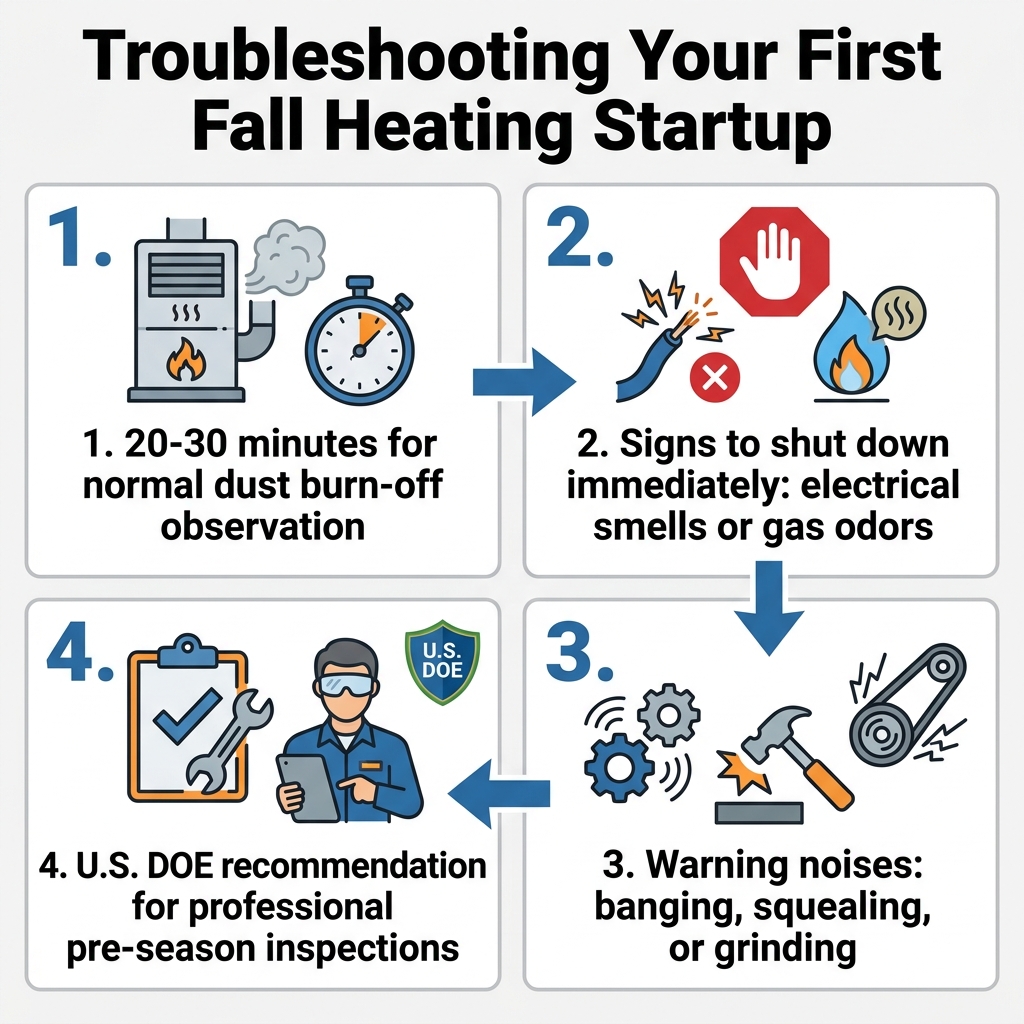
To determine if your system is operating safely, our technicians rely on a specific timeframe. We advise our San Antonio customers to expect exactly 20-30 minutes of normal dust burn-off time during the initial heating startup. Here is a safe, step-by-step observation process we recommend for homeowners:
1. Note the exact time: The moment you turn the thermostat to "heat" and hear the system engage, check the clock. Do not rely on guessing how much time has passed.
2. Observe the specific odor: The smell should resemble scorched dust or an overheated hairdryer. It should not smell like melting plastic, ozone, or rotten eggs.
3. Ventilate the living space: If the odor is bothersome, open a few windows or turn on ceiling fans to help circulate fresh air while the system runs.
4. Monitor the clock strictly: As the system continues to run, the smell should progressively weaken. By the end of the 20-30 minutes of normal dust burn-off time, the odor should dissipate completely.
If the smell clears up within this window, your system has successfully completed its transition process. The internal components are now clean of summer debris, and you can safely close your windows and enjoy the warmth. However, if the smell persists beyond this timeframe, or if it changes in character, you have crossed the threshold from normal operation into potential mechanical trouble.
Warning Signs: When to Shut Down the Heating System Immediately
While dust burn-off is harmless, other odors indicate severe, potentially dangerous malfunctions. Establishing clear boundaries for when professional intervention is mandatory is critical for your safety. If the odor coming from your vents smells like acrid, melting plastic, burning rubber, or electrical ozone, you are likely dealing with a failing electrical component. This could be a seized blower motor, melting wire insulation, or a failing capacitor. Similarly, if you ever smell sulfur or "rotten eggs," this is the distinct additive used in natural gas to alert you to a dangerous leak.
The Hidden Danger: Cracked Heat Exchangers
One of the most severe risks our technicians look for during a mid fall / October heating startup is a cracked heat exchanger. The heat exchanger is the metal chamber that separates the toxic combustion gases (like carbon monoxide) from the breathable air circulating into your home. Over years of expanding and contracting during heating cycles, the metal can fatigue and crack. If this happens, toxic gases can leak directly into your ductwork. Because carbon monoxide is odorless, colorless, and tasteless, it is impossible to detect without dedicated sensors or professional testing equipment.
Strict Boundaries for Homeowners
Homeowners must never attempt internal mechanical, gas, or electrical repairs themselves. Opening the sealed combustion chamber, adjusting gas valves, or testing high-voltage electrical relays requires specialized training and licensing. If you encounter any of the hazardous warning signs mentioned above, the solution is immediate and absolute:
• Step 1: Walk directly to your thermostat and turn the system setting to "Off."
• Step 2: If you smell gas, evacuate the home and contact your local gas provider immediately.
• Step 3: For electrical odors or persistent burning smells, leave the system off and contact a licensed professional for heating services to perform a safe diagnostic check.
Diagnosing Unusual Heating System Noises After Summer
Beyond unusual smells, mechanical sounds are the next most common cause for concern during the initial seasonal startup. Just like odors, some noises are perfectly normal, while others are cries for help from failing machinery. When the furnace ignites, we always listen for a faint "whoosh" of the burners lighting, followed by minor clicking or popping sounds. These normal clicks are simply the metal ductwork and the internal cabinet expanding and contracting as the temperature changes rapidly.
However, our team sees firsthand how San Antonio's intense summer heat places immense, prolonged strain on shared HVAC components, increasing the risk of mechanical failure during the first unpredictable winter dip. Your blower motor, for instance, does not get a break when summer ends. It is responsible for pushing chilled air all summer and heated air all winter. After battling extreme attic or outdoor temperatures for months, the bearings, belts, and fan blades are highly susceptible to fatigue.
Common Problematic Noises and Their Causes
• Loud Banging or Booming — Likely Mechanical Cause: Delayed gas ignition (gas builds up before igniting) — Required Action: Shut off system; call a professional immediately.
• High-Pitched Squealing — Likely Mechanical Cause: Failing blower motor bearings or a slipping internal belt — Required Action: Schedule a professional inspection before the motor seizes.
• Harsh Grinding or Scraping — Likely Mechanical Cause: Unbalanced blower wheel or loose internal mountings — Required Action: Turn off system to prevent severe cabinet damage.
If you hear a loud boom when the heater turns on, this is often a sign of delayed ignition. Dirt or carbon buildup on the burners prevents the gas from lighting instantly. Gas accumulates in the chamber, and when it finally catches, it creates a small explosion. This puts tremendous stress on the heat exchanger and requires immediate professional cleaning and calibration by our technicians.
Airflow, Ductwork, and Indoor Air Quality Challenges
System performance and unusual odors are heavily tied to the health of your ductwork and your air filter maintenance. One of the most overlooked aspects of preparing for the colder months is simply replacing the air filter. After a long summer of trapping dust, pollen, and pet hair, your filter is likely severely restricted. A clogged filter chokes the system of the incoming air it needs to operate efficiently.
When a furnace cannot pull in enough air, the internal temperature rises rapidly. To prevent a catastrophic fire, modern heating systems are equipped with a high-limit safety switch. If the internal cabinet gets too hot, this switch automatically shuts the burners off. Once the system cools down, it will try to start again, only to overheat and shut down once more. This rapid on-and-off cycle is called "short-cycling," and it will quickly destroy your equipment while leaving your home uncomfortably cold.
The Role of Attic Ductwork
The condition of your ductwork plays a massive role in indoor air quality and overall system efficiency. Compromised plenums or torn flexible ducts can pull dirty, dusty, or fiberglass-laden air straight from your attic and circulate it into your living space. This not only creates persistent dusty smells but also drastically reduces the volume of warm air reaching your rooms.
Addressing duct and plenum issues proactively ensures better performance across all seasons. For example, our team recently helped a local San Antonio homeowner who experienced poor airflow and inefficiency during the winter due to a damaged flexible duct and plenum box in the attic. By having our professionals replace the flexible duct and plenum box, we successfully restored proper system function, eliminating the air leaks that were compromising both their heating and cooling efficiency. Understanding how clogged air ducts impact your HVAC system is vital for maintaining a clean, breathable indoor environment.
The Value of Proactive Pre-Winter Inspections
Shifting your mindset from reactive troubleshooting to proactive care is the key to a stress-free winter. The U.S. Department of Energy strongly recommends professional pre-season inspections to ensure safe operation, maximize energy efficiency, and prevent unexpected breakdowns. A highly trained technician does much more than just look at the unit; they perform a comprehensive series of safety checks that are impossible to conduct without specialized tools.
During a routine expert maintenance visit, our professionals will measure electrical amp draws, test the high-limit safety switches, clean the flame sensor, inspect the heat exchanger for microscopic cracks, and verify that the gas pressure is calibrated to exact manufacturer specifications. This level of detail provides valuable guidance on energy savings and prolongs the lifespan of your expensive equipment. At Reliabee, our comprehensive maintenance plans and expert technicians are here to serve as your definitive authority for diagnosing complex issues and keeping systems running smoothly year-round. Working with certified experts means you have a dedicated team capable of resolving intricate mechanical problems before they leave you freezing on a Sunday night.
Comprehensive Home Performance
Sometimes, the heating unit itself is functioning perfectly, but the home is still cold. This is where comprehensive home performance solutions come into play. By evaluating the entire HVAC envelope—including insulation levels, duct leakage, and thermal boundaries—professionals can optimize how your home retains the heat your system produces.
Proactive maintenance prevents peak-season disasters. For instance, our crew recently assisted a local homeowner who found that their two-year-old system was not cooling properly during the peak of summer. Our technician diagnosed the system and performed targeted performance services, which achieved the necessary increase in system performance. By applying this same proactive approach with our team to your heating system in the fall, you safeguard your home against sudden, highly stressful transition breakdowns.
Securing Your Home's Comfort for the Winter Ahead
Mastering basic home maintenance tips and troubleshooting gives you the confidence to handle seasonal transitions safely. By remembering the critical difference between 20-30 minutes of normal dust burn-off time and the hazardous signs of a critical failure, you can protect your equipment and your household. Never ignore electrical smells, persistent gas odors, or loud mechanical grinding.
As the temperatures begin to drop, prioritize safety and efficiency over simply hoping the system holds together for another year. If you experience any unusual symptoms that persist beyond the initial startup window, do not hesitate to step back and let the experts handle the heavy lifting. Scheduling a professional inspection with Reliabee before the freezing weather arrives is the smartest way to ensure absolute peace of mind for the colder months ahead.
Frequently Asked Questions About Fall Heating Startups
Why does my heater smell like burning dust when I turn it on?
This happens because dust and airborne debris settle on the heat exchanger and heating elements during the long summer months when the system is dormant. When you turn on the heat for the first time, these components get extremely hot and instantly incinerate the settled dust. This process creates a temporary, harmless burning odor that circulates through your vents.
How long should a heater smell when turned on for the first time?
Our team advises homeowners to expect the burning dust smell to last for about 20 to 30 minutes during the initial startup. As the system continues to run, the odor should progressively fade until it disappears completely. If the smell persists past this timeframe, or if it smells like melting plastic or rotten eggs, shut the system down immediately.
When should I call a professional for heating noises?
We recommend calling a professional if you hear loud banging, high-pitched squealing, or harsh grinding sounds coming from the HVAC cabinet. While minor clicking from metal expansion is normal, loud booms can indicate delayed gas ignition, and squealing usually points to failing blower motor bearings. These mechanical issues require immediate expert diagnosis to prevent severe system damage.
What maintenance does a heating system need in the fall?
Fall maintenance should include a professional inspection of the heat exchanger, testing of all safety limit switches, cleaning of the flame sensor, and calibration of the gas pressure. Homeowners should also replace their air filter to ensure proper airflow and inspect the area around the unit to ensure it is free of clutter. The U.S. Department of Energy recommends this professional pre-season check to guarantee safe and efficient winter operation.
Can a dirty air filter cause my heater to shut off?
Yes, a severely clogged air filter restricts the amount of air flowing through the system, causing the internal components to rapidly overheat. When the cabinet temperature gets too high, a built-in safety limit switch will automatically shut the burners off to prevent a fire. This leads to a damaging cycle called short-cycling, where the heater repeatedly turns on and off without actually warming your home.

Ready to Transform Your Home?